It's easy to live with a sliding door that's a little harder to open than it used to be. But "a little harder" rarely stays that way, here's what actually tends to happen when a stuck or noisy door goes unaddressed.
Worn Rollers Damage the Track
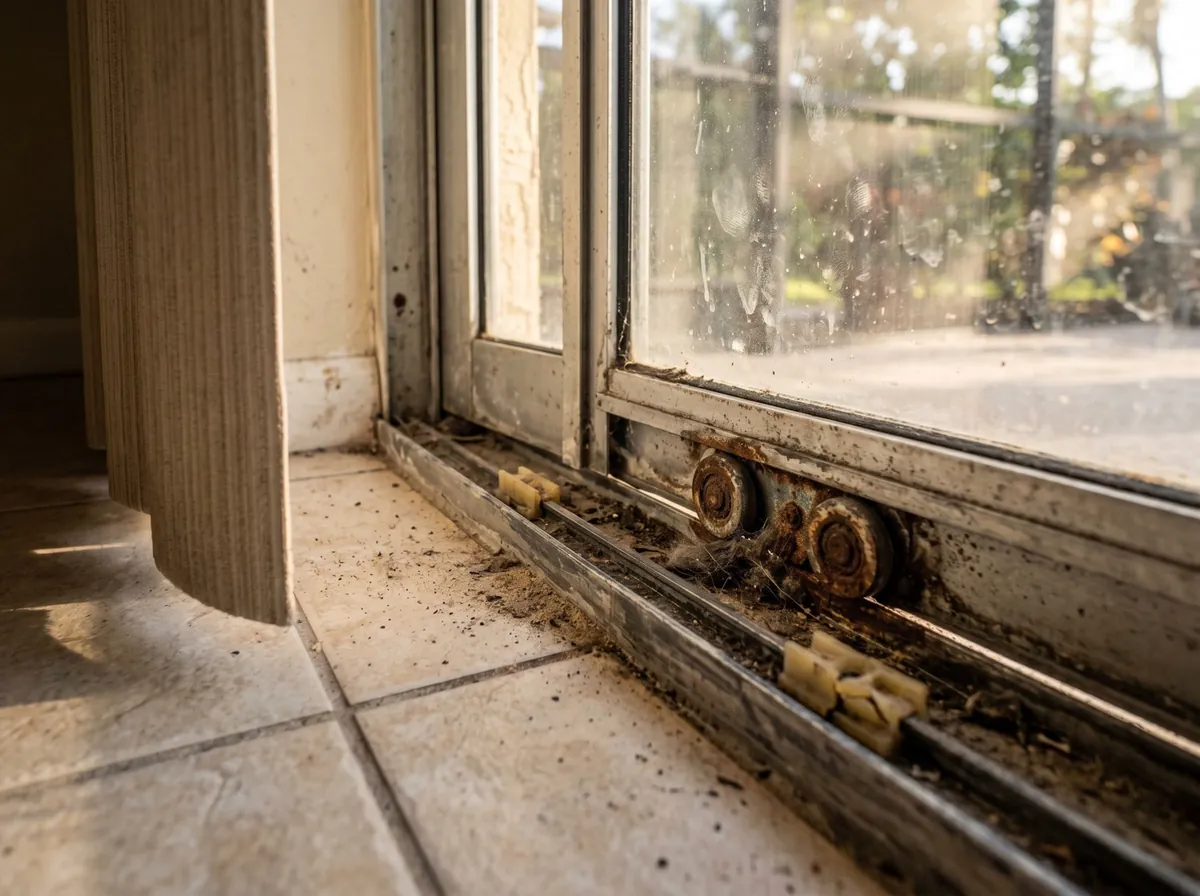
A roller with a flat spot or a seized bearing doesn't just make the door heavier to open, it grinds against the track every time the door moves. Left long enough, that grinding can groove or bend the track itself, turning a $150–$280 roller job into a $180–$350 track repair, or more.
Forcing the Door Stresses the Whole Frame
When a door is hard to open, the natural response is to push or pull harder. That extra force doesn't just affect the rollers, it can stress the panel, the frame corners, and in worst cases crack the glass if the door binds hard enough while someone is pushing.
A Failing Lock Becomes a Security Gap
A lock that "usually" catches is a lock that sometimes doesn't. That's not just inconvenient, it's a real security gap that tends to get worse gradually until the day it simply doesn't lock at all.
Worn Weather Seals Let in More Than Just Air
A gap that starts as a minor draft can become a path for wind-driven rain during storms, and consistently higher cooling costs from conditioned air escaping. In Florida specifically, this is also a bigger deal heading into hurricane season.
Small Problems Compound
Rarely does a sliding door have just one issue by the time it's ignored for a year or two, worn rollers lead to track wear, which throws off alignment, which stresses the lock. What would have been a single $200 repair addressed early can become two or three compounding issues addressed late.
The Actual Math
Most single-issue repairs (a roller, a lock, a seal) run $150–$350. Multi-issue repairs from compounding neglect often run $400–$700+. The math consistently favors catching it early.
Small problem now, or bigger one later
Get it looked at while it's still a simple, affordable fix.