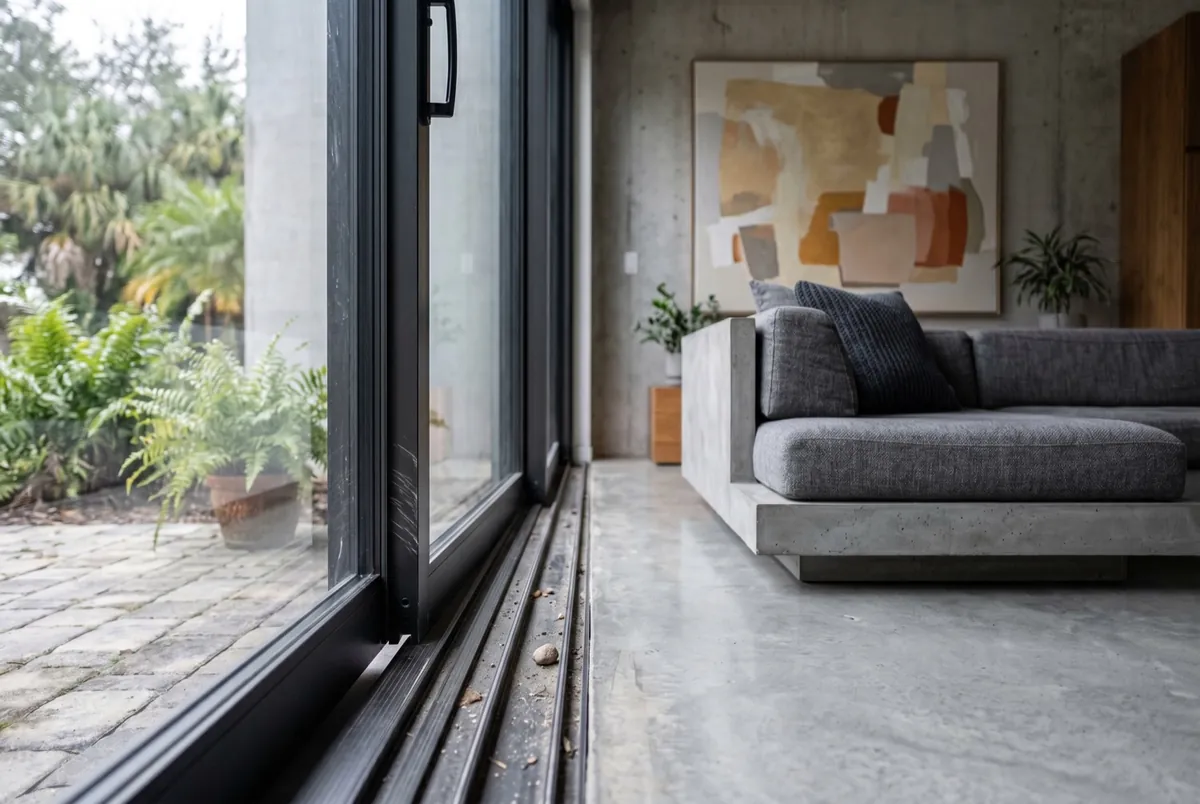
Every year, homeowners replace sliding doors that could have been repaired for a fraction of the cost, usually because the first quote they got came from a company that only sells replacements. Here's how to tell which situation you're actually in.
The Default Should Be: Can It Be Repaired?
The large majority of "my sliding door is a problem" situations come down to worn rollers, a dirty or slightly bent track, a failing lock, or a worn weather seal, all straightforward, affordable repairs. Full replacement should be the exception, not the starting point, unless there's a specific reason the frame or glass itself is compromised.
Signs a Repair Is the Right Call
- The door is hard to open/close, but the frame itself isn't bent or cracked.
- You hear grinding, scraping, or squeaking, but the glass and frame look intact.
- The lock doesn't catch reliably, but the door still slides normally otherwise.
- There's a draft, water intrusion, or fogging in the glass, but the frame is square and solid.
- The door was working fine until a specific part failed (a roller, the lock, a section of track).
In all of these cases, a repair typically restores the door to like-new function for a fraction of a replacement's cost, often in a single visit.
Signs Replacement Genuinely Makes Sense
- The frame itself is warped, rotted (on wood-framed doors), or structurally compromised, not just the track.
- The glass is cracked across a large area or shattered, rather than just fogged between panes.
- You're renovating and want a different size, style, or energy rating, not fixing a malfunction.
- The door has been patched repeatedly and the underlying frame is simply at the end of its life.
If your situation matches this list, replacement is a reasonable recommendation, and a trustworthy repair company should tell you that plainly instead of trying to sell you an unnecessary repair.
Why the "Replace It All" Recommendation Is So Common
Full-door replacement is where window and door companies make their margin, a $2,000–$3,000+ job pays a lot more than a $250 roller swap. That's not necessarily dishonest, but it does mean the incentive is tilted toward recommending replacement even when a repair would solve the problem. A second opinion from a company that specializes in repair (and isn't trying to sell you a new door) is the fastest way to find out which category you're actually in.
A Simple Way to Get Clarity Fast
Send photos of the track, rollers, and any visible damage, or book a free on-site inspection. A repair specialist can usually tell within minutes whether you're looking at a $200 fix or a door that genuinely needs replacing, and either way, you'll have a straight answer instead of a sales pitch.
Not sure which one you have?
We'll give you an honest answer, repair or replace, before we ever touch your door. Free estimate, no pressure either way.