A lock that needs to be jiggled, slammed, or lifted just right to catch isn't a quirky habit of your door, it's a specific, diagnosable failure. Here are the four most common causes, in order of how often we actually see them.
1. The Door Panel Has Shifted Out of Alignment
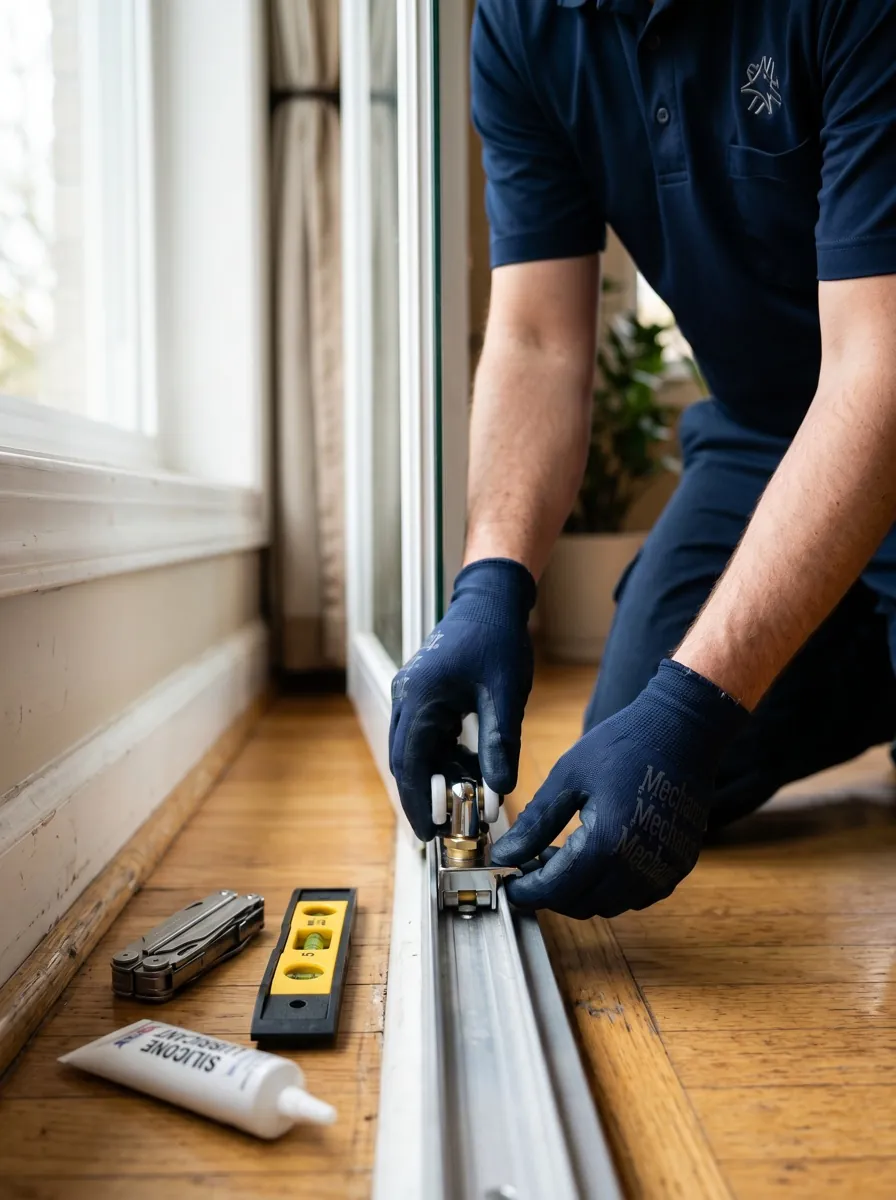
This is the most common cause. As rollers wear down, the panel gradually drops or shifts, and the lock's latch no longer lines up with the strike plate on the frame the way it did originally. The fix here is often roller replacement and re-leveling the panel, not touching the lock hardware at all.
2. The Strike Plate or Keeper Is Worn or Bent
The strike plate (or keeper) is the small metal piece on the frame that the lock's latch or hook catches into. Years of slightly-off engagement can wear a groove into it or bend it slightly, so even a perfectly aligned door won't lock cleanly. This is a quick, inexpensive part replacement.
3. The Lock Mechanism Itself Is Failing
Multi-point locking systems especially have internal components that wear out, springs weaken, the connecting rods that engage multiple lock points along the frame can bind or loosen. If the handle feels loose, gritty, or requires extra force to throw the lock, the mechanism itself is likely the issue.
4. The Door Isn't Fully Closing Before You Try to Lock It
Sometimes the real issue is upstream: a stiff track or worn rollers mean the door never quite reaches its fully-closed position, so the lock is being asked to catch from slightly the wrong spot every time. This one often gets misdiagnosed as "a bad lock" when the lock itself is fine.
Why This Isn't Something to Leave Alone
A lock that only catches "most of the time" is a lock that isn't reliably securing your home. It's also one of the more affordable fixes on this website, there's little reason to leave a security gap unaddressed once you've noticed it.
A lock that half-works is a security risk
Get it looked at and fixed properly, most lock repairs are done in under an hour.