A sliding door lock that catches most of the time is a lock that sometimes doesn't. Homeowners get used to the extra jiggle or the second attempt and stop thinking of it as a security issue, until it matters.
Sliding Doors Are Already a Target
Sliding glass doors are one of the more common entry points attempted in residential break-ins, precisely because the locking mechanism is simpler than a deadbolt and easier to defeat when it's already compromised. A lock that doesn't fully engage narrows the gap between 'secure' and 'not' even further.
Why This Happens
- The panel has shifted slightly out of alignment (often from worn rollers), so the latch no longer meets the strike plate cleanly
- The strike plate itself is worn or bent from years of imperfect engagement
- The lock mechanism's internal components, springs, connecting rods on multi-point systems, are wearing out
Why a Quick Fix Isn't the Answer
Spraying the lock with lubricant or bending the strike plate slightly with pliers might make it catch today. It doesn't address why the lock stopped engaging reliably in the first place, and a lock that's been forced into temporary alignment can fail again with less warning than before.
This Is Also Often a Symptom, Not the Root Cause
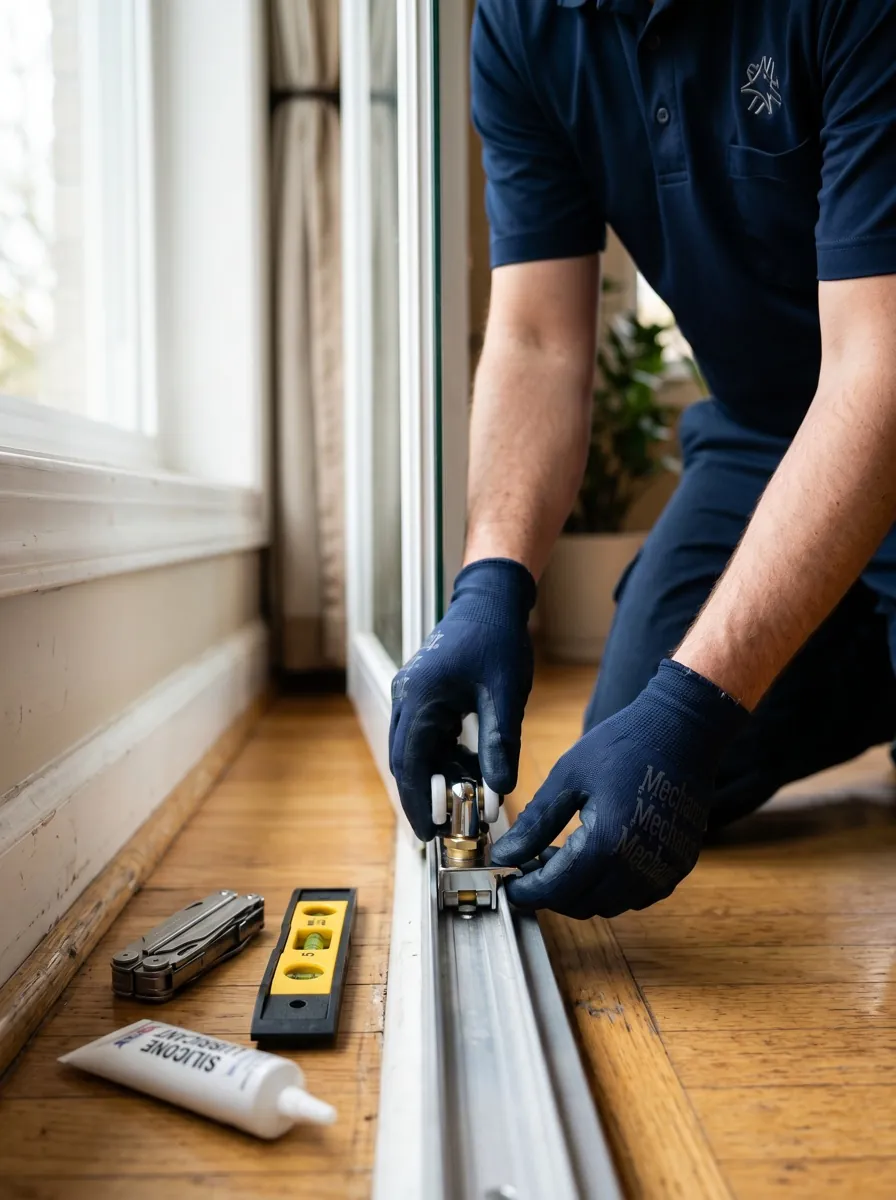
In many cases the lock itself is fine, the real issue is a panel that's no longer sitting where it should due to worn rollers or a shifted track. Fixing the lock without addressing that will just have the same problem return.
How Happy Sliding Doors Approaches It
We check the full system, panel alignment, track, and the lock mechanism itself, to find the actual cause, not just the symptom. Most lock issues are resolved the same day, with a 12-month warranty on the repair.
Get your lock actually securing your home
Most lock repairs are done in under an hour. Free estimate, licensed & insured.